

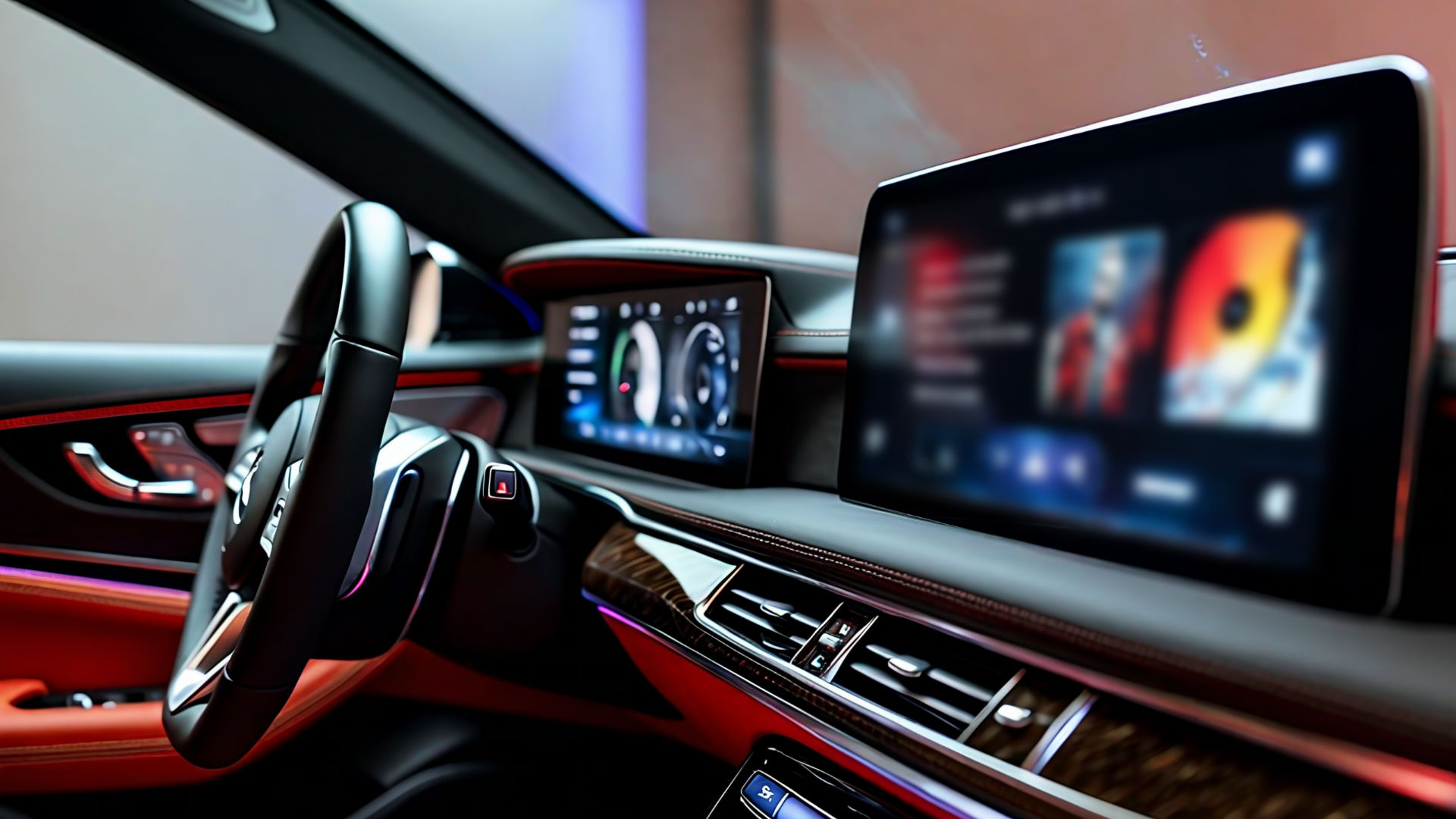
If you run a radio station, you need to make sure your station appears competitive on car dashboards. This means sending metadata (text and images) containing your station’s name, logo, song title/artist/image, program information, and advertiser/sponsor information. This guide explains all the different ways to achieve this in 2025.
The text and image data your radio station sends is often to referred to as ‘PAD’ (Program Associated Data) or simply ‘metadata’.
The advent of car infotainment apps, such as Spotify and Apple Music, has raised the standard of metadata expected by audiences. Unless radio stations rich data to augment the radio listening experience, they will not appear competitive compared to their Internet-era competitors.
This is an increasingly complicated space. While RDS was traditionally the only way to send text to a car’s radio receiver, new entrants such as AutoStage and Radioplayer have introduced hybrid-radio functionality. While larger players have been working with auto manufacturers to get their platform embedded in cars, open standards like RadioDNS and RDS2 have not gained traction.
All these platforms mentioned below need connectivity into your broadcast systems to access and convert the metadata. At the bottom of this article, I show you how our product, MetaRadio, can make this connection to a variety of platforms very easy.
RDS

RDS is the de-facto way to send text to car radios for FM stations. RDS has existed since the 1980’s, and became standard in most cars in the 2000’s. RDS allows you to send:
- 8-character Station Name (Programme Service name – PS).
- 64-character text (RadioText) – used for sending song, program, advertiser/sponsor, and other arbitrary text.
- RadioText+ is a way of ‘tagging’ text within your RadioText string as title and artist.
- RDS has other data types, but they are not widely implemented.
For a full guide to RDS, read my article Your Guide to FM RDS: What Is It, and How Does It Work?
To send RDS for your FM Radio Station, you need an RDS Encoder and some software (such as MetaRadio) to send your data (such as the title & artist from your radio station’s automation system) to your RDS Encoder.
DAB & DAB+

DAB and DAB+ are the digital broadcast standards used across much of Europe and Australia. DAB systems have a shared transmitter (multiplex), which allows a multiplex operator to transmit many stations on the one frequency. DAB/DAB+ is an open transmission standard, based on AAC and HE-AAC audio codecs, and transmits in the TV bands.
DAB and DAB+ can send three types of data:
- Service Label – The name of the station.
- Dynamic Label Segment (DLS) – used for sending song, program, advertiser/sponsor, and other arbitrary text. This is the DAB equivalent of RadioText.
- DL+ is the way of tagging specific fields within your DLS, such as title and artist.
- MOT Slideshow (Multimedia Object Transfer) – You can send small images, such as your logo, program images, music cover art, and advertiser/sponsor images.
To send DLS and MOT for your DAB/DAB+ Radio Stations, you need to send your metadata (such as the title & artist from your radio station’s automation system) to your DAB+ Encoder, using metadata software like MetaRadio.
HD Radio

HD Radio is the digital radio standard used primarily in the United States. As well as the MPS (Main Program Service), you can transmit additional stations (SPS – Supplemental Program Service). Your MPS station (HD1) matches the main FM station, and your SPS stations are digital-only (typically HD2, HD3, & HD4). HD Radio transmits on-band in both AM and FM, and is a proprietary standard owned and licensed by Xperi.
HD Radio can transmit data alongside each audio program:
- PSD (Program Services Data) Text – separate fields for title & artist text.
- Station Logo – A static image for your station.
- Artist Experience Images – Dynamic images that are synced with your audio. Although its called the ‘Artist Experience’, its not only used to send music cover art, but also sponsor images and program images.
All images in the HD Radio system can be up to 200px x 200px each.
MetaRadio is the most cost effective way to send metadata to HD Radio systems. MetaRadio takes the data from your radio automation system and sends it to your HD Radio system.
DTS AutoStage
DTS AutoStage (part of Xperi) is a proprietary system built into some high-end car infotainment systems. It uses the internet to send data to car dashboards from registered radio stations, and in turn it sends listener analytics back to the radio station. It can send real-time title/artist text and images.
While a full list of vehicle brands and models hasn’t been published, DTS AutoStage can be found in some car models from brands such as Hyundai, Kia, Genesis, Nissan, Toyota, Volvo, Jaguar, BMW, and Mercedes. DTS says their technology is in 10 million cars, including 6 million in North America. As this technology requires an internet connection, it is more commonly found in higher-end cars that include internet connectivity.
AutoStage is free for radio stations. You can sign up online and then connect your metadata. To send metadata you need a compatible automation system, or a middleware system such as MetaRadio.
Radioplayer & RadioDNS

Radioplayer is another semi-proprietary system built into high-end car infotainment systems. Like DTS AutoStage, it uses the internet to provide realtime metadata for terrestrial radio stations. Radioplayer provides data to car dashboards via the RadioDNS standard, under special agreements with car manufactures to make a full suite of metadata available to their cars.
Radioplayer is a non-profit owned by UK radio broadcasters, but also operates in some other countries. If Radioplayer operates in your country, you can sign-up for the platform and then start sending metadata using an app like MetaRadio.
Radioplayer has not published a full list of supported car brands and models, but their technology can be found in some models from Audi, BMW, Nio, and Volkswagen.
RDS2
RDS2 is an emerging standard as an extension to the original RDS. This update uses three additional subcarriers, to allow for a higher bitrate (maximum 4750 bits per second), and thus transmission of additional data such as images.
Some RDS2 encoders have existed since 2018, but so far no commercially available RDS2 radio receivers exist. For this reason, it is not a relevant standard to broadcasters at the present time.
Sending Metadata to all Car Dashboards
All the above systems need a system to enable the transmission of this metadata. An app such as MetaRadio allows you to connect your data sources (such as radio automation system, syndication providers, and fingerprinting services), and send them to all these car dashboard services simultaneously. We have put in the hard work to make these connections easy, so all you need to do is install the software and connect it.
A middleware app such as MetaRadio allows you to send your song data, and merge it with other text and image data such cover art, sponsor logos, and program information.
By ensuring your send data to all available car dashboards, you can ensure your station grabs the attention of your listeners in the widest range of cars.
Many radio stations monetise the car dashboard by selling premium advertisement placements. You can also do this with MetaRadio.
Why are there so many different radio metadata ‘standards’?
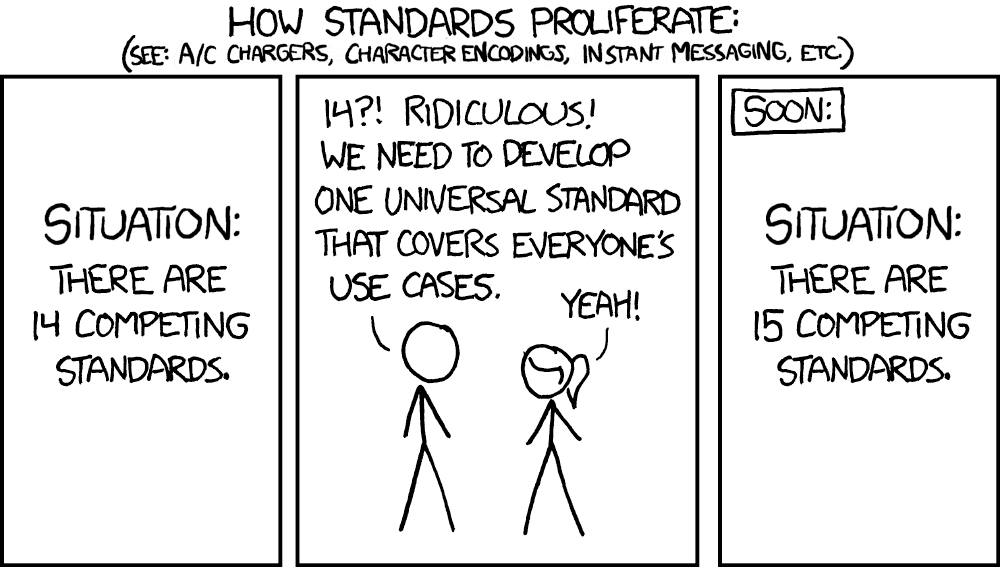
“The good thing about standards is there’s so many to pick from“.
Radio delivery technology has traditionally been open. AM and FM, while originally protected by patents, saw widespread adoption and gained a near monopoly status as far as car entertainment technologies go. “Compete on content, not technology” is a remark I’ve heard multiple times over the years, making the proposition the radio industry should ensure they have interoperable platforms, but compete only on their content, ensuring radio as a medium overall has a strong audience and a healthy future.
Times have changed a little bit. Technology giants like Apple and Spotify offer their own on-demand audio platforms, which have seen widespread adoption in car dashboards. Individual broadcasters have been developing and promoting their own apps – BBC, iHeartRadio, and LiSTNR come to mind. The dashboard – the place radio used to monopolise – is now a highly sought after piece of real estate.
Meanwhile, the industry has tried different approaches to make their product prominent and competitive against these new entrants.
RDS and DAB/DAB+ were invented well before this recent fight for the dashboard started, and are still essential technologies to broadcasters. RDS2 has seen no major traction as a standard – I personally believe while it’s theoretically a good idea, it doesn’t offer enough and even if it did, no one is really pushing for its adoption. RadioDNS, another open standard, has seen limited take-up by car manufacturers for delivery of hybrid radio services.
Meanwhile, DTS AutoStage and Radioplayer have been working directly with car manufacturers to get their platform loaded into cars.
This landscape will likely keep changing. Some countries are starting to legislate ‘prominence frameworks’ – rules around how local, incumbent broadcasters need to appear vs their overseas and startup competitors. Australia has legislated for Smart TV prominence, and will likely move to legislate for Smart Speaker prominence next. Commercial Radio & Audio Australia has recently called for Car Dashboard prominence (James Cridland highlights the foolishness of Australia trying to go it alone).
I personally believe the radio industry needs to push for open standards alongside any push for prominence. It seems like a foolish long-term strategy to allow third-party organisations to be the gatekeeper between radio and its audiences. Open standards will not see adoption without people pushing for it. DTS/Xperi have been able to gain a lot of traction by leveraging their existing automaker relationships, and their efforts so far appear to be a net positive for the industry. Longer term, we should ensure the industry is offering standards compliant and robust technology – technology so attractive, car manufacturers can’t help but adopt it.
In the meantime, make sure you leverage as many of these platforms as you can to ensure your product looks good on as many car dashboards as possible.